
Joomla web development in Dubai
Joomla built for the UAE: Arabic and English from one admin, local payment gateways and 5% VAT handled properly, and an honest answer on whether Joomla is even the right platform for your project.
Is Joomla the right platform for your Dubai business?
Joomla earns its place when a site has to do three things at once: publish in Arabic and English from one admin, give different departments different levels of access, and run for years without a licence renewal. That describes a lot of organisations here — free zone authorities, clinics, schools, trading companies with a catalogue, associations with a member area.
It is the wrong call if you want a marketing site your own team will restyle every quarter, or if your shortlist of plugins only exists for another platform. In those cases we will say so and point you at WordPress instead. We would rather lose a Joomla brief than hand you a platform you end up fighting.
Arabic and English, built in from the first sprint
Most platforms treat a second language as a bolt-on bought later. Joomla does not: languages, content associations and right-to-left rendering are part of the core, so an Arabic article and its English counterpart are linked records rather than two unrelated pages held together by hope.
That only helps if the build respects it. We set the language filter and associations up on day one, mirror the template so navigation, breadcrumbs, forms and PDFs flip direction properly, and pair an Arabic web font that stays readable at body size with the Latin face beside it. Numerals, dates and phone numbers get an explicit rule instead of whatever the browser guesses. Editorial work such as Jadidouna taught us how much of bilingual publishing is typography and workflow rather than translation.
Joomla e-commerce, UAE payments and 5% VAT
A Joomla store usually runs on VirtueMart, HikaShop or J2Store. Choosing between them is a commercial decision, not a technical one — it depends on how many SKUs you carry, whether you sell wholesale and retail at different prices, and how your stock reaches the site.
The part that trips up imported templates is local payment. Some UAE gateways publish a ready plugin for these carts; others need a connector written against their API. We confirm which situation you are in before quoting, so the answer is never discovered halfway through the build:
- Network International (N-Genius) and Telr — common for AED-denominated checkout with local acquiring
- PayTabs — often chosen where the same merchant sells across the GCC
- Stripe UAE — straightforward for card and wallet payments with a modern API
- Cash on delivery and bank transfer — still requested far more often here than most agencies plan for
On tax, we configure the cart so displayed prices, the basket and the final tax invoice agree with each other at 5% VAT, and so your TRN appears where an invoice needs it. Catalogue and checkout questions we work through on retail projects — Alajlan4Oud in perfume, MusicGear in instruments, Yalla Snack in snack retail — carry straight across to a Joomla store.
Still on Joomla 3? That site needs a plan
Joomla 3 stopped receiving security updates in 2023. If your administrator still looks like it did five years ago, you are running unpatched code on a public server — and third-party extensions on that branch stopped being maintained too.
Moving to current Joomla is rarely a single click. We audit every installed extension first and sort it into three piles: has a maintained version, has a replacement, or has to be rebuilt. You get that list, with the effort against each line, before any work starts. Migration runs on a staging copy while the live site keeps trading, with URLs mapped and redirected so the addresses already indexed and already printed on your collateral keep resolving.
What drives the price of a Joomla project
We quote per project after scoping, never from a menu — but you can estimate where yours will land from what actually moves the number:
- Bilingual scope — a fully mirrored Arabic site is a different order of work from adding a language switch
- Template origin — a design drawn for your brand versus a commercial template we adapt
- Number of genuinely different page types, which matters far more than page count
- Integrations — payment gateway, courier, ERP or accounting sync, CRM
- Custom extension work when nothing in the directory does what you need
- Migration volume and how clean the existing data is
- Content — who writes it, who translates it, who uploads it
How the project runs, and how long it takes
A brochure-and-structure site typically runs four to six weeks from approved design; a bilingual site with a store and local payment more often eight to twelve. Scope changes and late content move those dates far more than development does.
- Discovery — your services, audiences, languages, and what the licensed activity actually is
- Structure — sitemap, category and access model, then the wireframes
- Design — key templates approved in both directions of reading
- Build — template, extensions, integrations, staging on a link only you see
- Content and review — loading, translation checks, a round of amends
- Launch — DNS, SSL, redirects, analytics, backup schedule verified
- Aftercare — updates and support on an agreed cadence
Hosting, domains and where your data sits
Joomla runs well on modest hardware and badly on cheap shared hosting sold by the year. We host on servers sized for the site, with PHP kept current, Akeeba backups taken off-server, and core plus extension updates applied on schedule rather than when something breaks.
Where your sector or your clients require it, we can place the site and its database in a UAE region so the data stays in the country — worth settling early, because moving hosting after launch is more disruptive than choosing correctly at the start. We handle .ae and .com registration and DNS, keep the trade licence details and TRN consistent across the footer and invoices, and align the site with the UAE Personal Data Protection Law where you collect personal information through forms.
What you get when we hand over
- A Joomla site you own outright, with super user credentials in your name
- A written editing guide and a live training session for whoever updates the site
- Structured data, clean URLs and correct language tags so both versions can be indexed properly
- A backup and restore routine that has been tested, not just switched on
- A named contact in Dubai Internet City who answers on UAE business hours
Tell us the platform you are on now and what the site has to do next. We will tell you whether Joomla is the answer, and if it is, exactly what the build involves. Talk to our Dubai team.
Joomla sites we have built
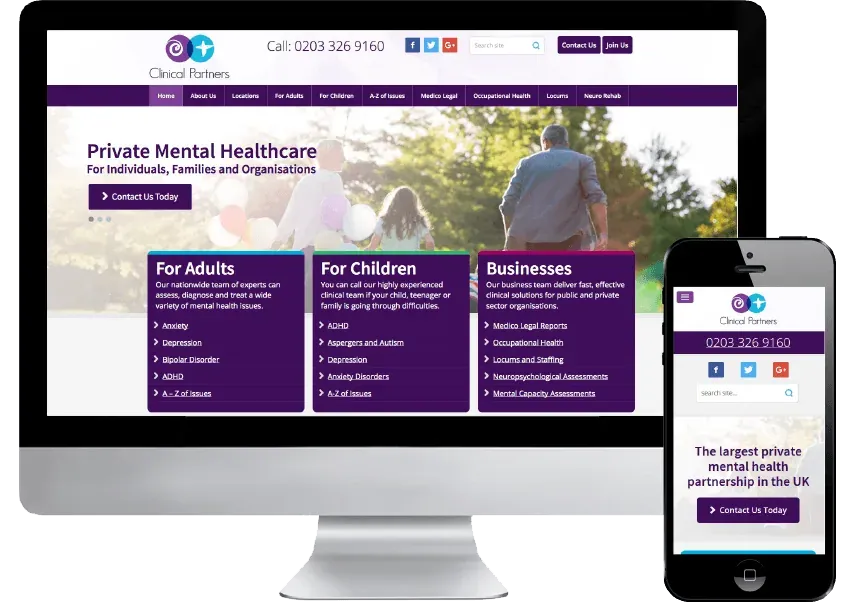
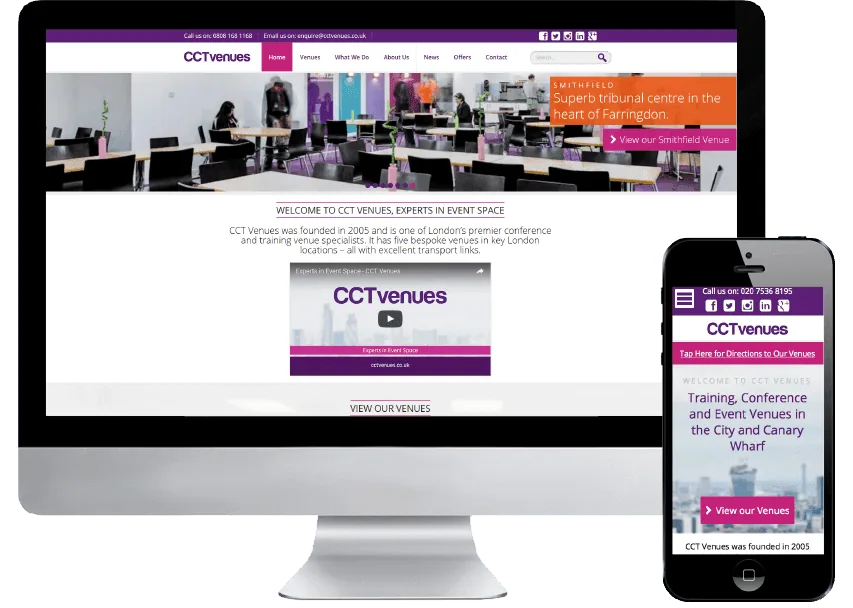
Two of the Joomla builds our team has delivered.
Access levels, named accounts and a clean handover
Joomla ships with user groups and access levels granular enough to describe how an organisation actually works: several divisions of one group sharing a single site, a clinic where the marketing coordinator and the practice manager touch different pages, a body where a notice is approved before anyone can publish it. All of it maps onto Joomla cleanly, provided someone designs it at the start. Skip that step and the site collapses into one super user login shared by everyone who needs to change a line.
Publishing in two languages sharpens the question of who holds which right. The person writing the Arabic may sit in another department, or be an external translator brought in for the job. They need to edit Arabic articles and nothing beyond them, and deciding when a page faces the public is a separate right from writing it. We build that as named accounts with real permissions, not one password passed around a WhatsApp group.
The other reason to avoid the shared login is that people move on, and a departure in the Emirates can mean leaving the country rather than changing desks. A named account can be disabled on someone's last working day; a shared one cannot be closed without locking out everyone else. We also record who holds the super user account, so the answer is never the developer who built it, and he has left. That is why training sits inside the handover rather than after it.
More in this family
- DevelopmentExplore our specialized development solutions, where our experienced developers focus on crafting and supporting websites, including CMS and eCommerce platforms, as well as mobile applications. Our emphasis on performance and user-friendliness ensures functional and optimized solutions that meet your business needs. With over a decade of industry experience, we stand ready to build any product …
- Web developmentiSky builds websites, stores and custom systems from Dubai Internet City — bilingual from the first line of code, wired to the payment gateways UAE merchants actually use, and handed over in your company's name.
- WordPressWordPress built for how business actually works in the UAE: Arabic and English designed together, WooCommerce wired to UAE payment gateways and 5% VAT, and hosting and .ae domains handled properly from Dubai Internet City.
- MagentoMagento and Adobe Commerce builds for UAE retailers — AED checkouts that clear local cards, 5% VAT invoices your accountant accepts, Arabic and RTL designed in from day one, and hosting in the region your buyers are in.
- E-commerceGenerate more sales on your Ecommerce website Development Solution with user focused design and functionality.
- Mobile appsAn award winning digital agency with experience in mobile app development
Have a project? Let's talk.
Tell us what you are trying to build. You will get a written scope and a price before any work starts.